Wednesday, December 25, 2013

Why You Should Not Tithe


God, Money, and You
Lesson 4: Why You Should Not Tithe (Selected Scriptures)
Steven J. Cole
December 5, 1993
"It would be political suicide to give that speech," said an aide to his boss. "He's right, Senator," chimed in another aide. "It's just one clear-cut statement after another" (Morrie Brickman, Reader's Digest [4/83]).
It's probably suicidal for a pastor to preach on why you should not tithe! It's risky at best, because some may hear the part about not tithing and block out the rest of the message! I would guess that if everyone who came regularly to this church gave ten percent to the church, our income would probably triple, at least! So why am I not preaching instead on why you should tithe?
The answer is that tithing is not the New Testament standard for giving. Perhaps more than any other factor, giving reflects the condition of our hearts: "Where your treasure is, there will your heart be also" (Matt. 6:21). You can fake some things, but you can't fake giving your money! You may get mad at me, but I'm going to give it to you straight: If you give ten percent or less of your income to the Lord's work, in most cases it reflects a lukewarm heart toward God. I used to give ten percent and thought I was doing fine. Then I made the mistake of preaching on giving! I discovered that God's Word teaches that ...
We should not tithe because God wants us to give generously, and tithing is the bare minimum.
Our God is a generous, giving God who so loved the world that He gave that most precious gift, His only begotten Son. "For you know the grace of our Lord Jesus Christ, that though He was rich, yet for your sake He became poor, that you through His poverty might become rich" (2 Cor. 8:9). As God's people who are to be like Jesus, we are to be generous givers.
The Bible teaches that God, who richly has supplied us with all good things, wants us "to be generous and ready to share" (1 Tim. 6:18). But what does generosity mean? Isn't giving 10 percent of my income to the Lord's work being generous? If not 10 percent, how much should I give?

1. Tithing is not the New Testament standard for giving.

Many churches promote a concept called "storehouse" tithing, based on Malachi 3:10, where God tells Israel to "bring the whole tithe into the storehouse." They teach that the local church is the storehouse, the tithe belongs to God, and His blessing is conditioned upon faithfulness in tithing. One pastor in a church near me in California preached that if his people weren't giving ten percent to that church, they were in sin and needed to go home and repent!
Before I critique this view, let me point out that there are some commendable points regarding tithing: (1) Those who tithe are often acting in obedience to what they believe God has commanded. (2) Tithing gets some to increase what they give. (3) Tithing helps consistency and discipline in giving. But consider these seven reasons why tithing is not God's standard for Christians:

A. Tithing was a part of the law of Moses; believers are not under the law.

Romans, Galatians, and other New Testament passages make it clear that Christians are not under the law of Moses. That does not mean that we are lawless, because we are under the law of Christ (1 Cor. 9:20-21; James 1:25; 2:8, 12; Rom. 13:8-10). Those aspects of the Mosaic law that reflect the moral character of God are valid under the New Covenant and are repeated as commands in the New Testament. But the church is never commanded to tithe.
Those who argue for tithing point out that Abraham and Jacob both tithed prior to the Mosaic law (Gen. 14:20; 28:22). Thus tithing supersedes the law, they argue. If the New Testament gave no further guidelines, that might be a valid point. But it does, as I will show. But there are other practices, such as circumcision and sabbath-keeping which pre-date the Law and yet are not binding on us.
If you examine the references to Abraham's and Jacob's tithing, you will see that God did not command them to tithe and there is no indication that this was their regular practice. On one occasion after a victory in battle, Abraham tithed the spoils from that battle, but nothing is said regarding his other possessions or his regular income (Gen. 14:20). To follow Jacob's example would be wrong, because he was making a conditional vow before God, promising that if God would keep him safe and provide for him, then he would give God a tenth (Gen. 28:20-22). That's hardly a good example to follow in giving! Tithing was required under the Mosaic Law, but believers are not under the Law.

B. Tithing was an involuntary tax to support Israel; believers are not a part of the theocratic nation.

In the Old Testament, there was both required and voluntary giving. The tithe was required. It was commanded for every Israelite to fund national worship and help the poor. In actuality, there was not just one tithe, but rather two or three ([1] Lev. 27:30-33, Num. 18:20-21; [2] Deut. 12:17-18; [3] Deut. 14:28-29), so that the total was not 10 percent, but more like 22 percent (see Charles Ryrie, Balancing the Christian Life [Moody Press], p. 86). Thus if we are required to bring the whole tithe into the storehouse today, we had better up the percentage from 10 to 22 percent!

C. Tithing is not mentioned in any instructions to the church, although much is said about giving.

G. F. Hawthorne writes (New International Dictionary of New Testament Theology [Zondervan], 3:854:
Since the tithe played such an important part in the OT and in Judaism contemporary with early Christianity, it is surprising to discover that never once is tithing mentioned in any instructions given to the church. Jesus mentions scribes and Pharisees who tithe ..., but he never commanded his disciples to tithe. The writer to the Hebrews refers to Abraham paying tithes to Melchizedek and Levi paying his tithe to Melchizedek through Abraham ..., but he never taught his readers to follow their example. Paul writes about sharing material possessions to care for the needs of the poor ... and to sustain the Christian ministry.... He urges and commends generosity ... but never once does he demand, as a command from God, that any specific amount be given.
If tithing is to be practiced by the Christian church, it seems strange that Paul did not mention it when he wrote of giving, especially to the predominately Gentile churches which would not be familiar with the Old Testament.

D. Tithing is not mentioned in any writings of the early church fathers.

By itself this is not decisive, but it lends weight to the biblical arguments. If the early church practiced tithing, then the concept should surface somewhere in the writings of the church fathers of the second and third centuries. But it does not, even though giving was an important part of early Christian worship (see Hawthorne, pp. 854-855).

E. Tithing puts the wrong emphasis upon giving.

Tithing emphasizes your obligation to God; New Testament giving, as we shall see, emphasizes your willing, loving response to God's grace. Furthermore, tithing limits giving by making a person feel that he has paid his dues (so to speak) and thus nothing more is required, when, in fact, much more could be done. Tithing has a tendency to put a person on a legal basis with God, rather than a love relationship. It's the wrong emphasis.

F. Tithing leads to a false concept of stewardship.

It leads to the notion that 10 percent is God's money and 90 percent is my money. In reality, 100 percent is God's money, and He may want me to channel 90 percent into His work and live on 10 percent. Tithing can be a bad rut.

G. Tithing is burdensome for some and too easy for others.

If a man with a family of five makes $20,000 a year and tithes, he has $18,000 (apart from taxes) to support five people. If a childless couple makes $100,000 a year and tithes, they have $90,000 (apart from taxes) to support two people. That would be burdensome to the man with five mouths to feed, but ridiculously easy for the couple.
There are seven reasons that argue against tithing. Then what is God's standard for giving?

2. Generous grace giving is the New Testament standard.

When you say "grace," a lot of people, unfortunately, connect it with hang-loose, undisciplined living. But that is not grace! Nor is grace the balance point between legalism and licentiousness. Rather grace (as a system) is totally opposed both to legalism and licentiousness, which are two sides of the same coin.
Legalism and licentiousness both operate on the principle of the flesh. Legalism is an attempt to earn standing with God through human effort and leads to pride or condemnation, depending on how well you do. Licentiousness casts off restraint and lives to gratify the flesh.
But God's grace is His unmerited favor based on Christ's sacrifice. The motivating power in grace is the indwelling Spirit of God. The person under grace responds out of love and gratitude to God and depends upon the indwelling Holy Spirit to conform his life to what God requires. With that basic understanding of grace, let me spell out some things that grace giving is not, and then some things that grace giving is.

A. Grace giving is not ...

(1) Random and irresponsible. It does not mean that you give every now and then, hit and miss; rather (as we shall see next week), it is planned and systematic (1 Cor. 16:2; 2 Cor. 9:7).
(2) Based on feelings. Being under grace does not mean living by feelings. Living under grace means walking by faith and obedience in response to God's love. There are many commands under grace.
(3) Usually less than the requirement of the law. God's grace should motivate us to excel far more than the minimum under the law (1 Cor. 15:10).
(4) Giving God the leftovers. God deserves the best, not just what is convenient. If we love God with all our heart, soul, mind, and strength, then we won't just give Him what's left over after the bills are paid. He deserves first place.
Thus grace giving is not sloppy, irresponsible, haphazard giving whenever we feel like it.

B. Grace giving is based on ...

(1) God's example in Christ (2 Cor. 8:9). Aren't you glad that God did not just give a tenth! He gave all. The Lord Jesus Christ was infinitely rich. He dwelled in the unimaginable splendor of heaven, apart from the sin and corruption of this world. But He gave that up, laid aside His privileges, and took on human flesh. He could have chosen to be born as a prince in palatial splendor. But instead He was born and lived in poverty. He ultimately impoverished Himself to the maximum by taking upon Himself the sin of the human race in order that we might become rich (2 Cor. 5:21).
Grace giving looks to the nail-pierced hands of the Lord Jesus, who gave Himself so that we might be rescued from the wrath of God, and says, "Lord, You gave all for me! What can I give back to You?"
(2) The concept of stewardship. "You are not your own, for you have been bought with a price ..." (1 Cor. 6:19-20). All that we are and have belongs to God, not just a tenth. I am merely the manager of His resources. As a good manager, I use the Owner's resources to further His work (see Acts 2:44-45; 4:32-37; 11:27-30 for some examples).
(3) Inner motivation, not outward compulsion (2 Cor. 8:3-5; 9:7). Motive and attitude are crucial. It is better to give a small amount based on a loving response to God's grace than it is to give a large amount based on outward pressure or pride. Note the attitude of the Macedonian believers: they had an abundance of joy (2 Cor. 8:2); they gave of their own accord (8:3); they begged with much entreaty for the favor (8:4!); first they gave themselves to the Lord (8:5); they had both the readiness and desire (8:10-12, 9:2); they gave cheerfully, not grudgingly or under compulsion (9:7).
We should not think, "How much do I have to give?" but rather, "How much can I give?" We should not wait for someone to pressure us with a need; we should look for needs that we can meet (8:4). I look for and give to Christian organizations or workers that do not pressure donors with desperate appeals for funds. You almost don't notice these workers because there are so many pleading for your money so that they "won't go off the air next week." May I say, "Let them go off the air!" Christians ought to give based upon inner motivation, not outward pressure. Grace giving is based on ...
(4) A new relationship with the Holy Spirit, not the old dispensation of the Law. Romans 8:14 says, "For all who are being led by the Spirit of God, these are the sons of God." Galatians 5:18 says, "But if you are led by the Spirit, you are not under the Law." The context of both passages shows that Paul is talking about the Holy Spirit leading the believer into righteous, godly living. In Galatians, such righteous living is spelled out in the context, in part, as sharing financial resources (6:6, 10).
It's easier in some ways to follow a set of rules. Just give your 10 percent and that takes care of the matter. But God wants us to be led by the Holy Spirit. That's kind of scary! The Holy Spirit might want me to give 35 percent or who knows how much! But the point is, I am not living by rules, but in a relationship with the living God.
(5) How much God has prospered you. How much should you give? How much has God prospered you? (Note 1 Cor. 16:2, "as he may prosper"; Acts 11:29, "in the proportion that [they] had means"; 2 Cor. 8:3, 11, 12). Generally, they gave according to their ability, and in some cases beyond their ability. Sometimes you should give sacrificially. (We will look at that next week.) But the general principle is, give as God has prospered you.
When God entrusts you with more money, instead of spending it on more junk that you have to protect from moths, rust, and thieves, you should ask, "Lord, how do you want this money used in Your kingdom?" As God gives you more, you should increase the percentage you give, not just the amount. If you have enough to live comfortably, then invest the rest where God pays guaranteed, eternal dividends.
But here's the catch: we need to start giving where we're at, and not put it off until someday when we're rich. The Macedonians gave in the midst of a great ordeal of affliction, out of deep poverty (2 Cor. 8:2). Jesus commended the poor widow who gave all she had to live on, but He was not impressed with the large gifts of the rich, because they had much left over (Mark 12:41-44).
George Muller is remembered as a man who received millions of dollars to support his orphanage, in response to secret prayer, without making any needs known to others. What many don't know is that Muller gave away vast amounts to the Lord's work out of funds that were given for his personal support. From 1870 on, he personally contributed the full support for about 20 missionaries with the China Inland Mission. From 1831-1885, he gave away 86 percent of his personal income! As the Lord prospered him, he could have lived in style. But he lived simply and gave away the rest.

Conclusion

Generosity and grace giving are built on the qualities we have already studied. If you're free from bondage to greed and debt, you won't be enslaved to money. If you're a person of integrity and if you're faithful as a manager, not the owner, of your money, then when God supplies you with more, you will prayerfully channel anything above personal and family needs into His kingdom.
In this church, we don't use pressure or gimmicks to get people to give. I want your giving to be between you and God, based on your response to the love He has shown you at the cross. Also, I want to encourage each of you to refuse to give to any organization that uses pressure and fund-raising gimmicks. If you believe in the work of this church, then give generously as God has prospered you, out of love for Him.
Don't assume that because we don't use pressure we don't have needs. I believe it is legitimate to inform the church family about needs so they can give wisely. We have needs: to meet our monthly budget; to get some better office equipment; to pay off the mortgage on the house next door so that we can use it and the house across the street for ministry; to buy more property for adequate parking; to pave the lot behind the church. We have to turn away missionaries who need support. I believe the way to meet these needs is to help God's people get their hearts right before Him and to teach what His Word says about money and giving. As we respond to God's grace by giving generously, the needs will be met.
A farmer who was not much concerned with spiritual matters once went to hear John Wesley preach. Wesley was preaching about money and he soon had the farmer's attention, because his first point was, "Get all you can." The farmer nudged his neighbor and said, "This is unusual preaching! I've never heard the likes of this before. This is good!" Wesley talked about hard work and purposeful living.
His second main point was, "Save all you can." The farmer became more excited. "Did you ever hear anything like this?" he exclaimed. Wesley denounced waste and extravagance. The farmer was quite happy, thinking, "I do all this."
But then Wesley advanced to his third point, which was, "Give all you can." "Oh, dear! Oh, dear!" moaned the farmer. "He has gone and spoiled his sermon."
I hope you don't think that I have spoiled this series on money by saying, "Give all you can." God has given all for us; He wants us to be cheerful, generous givers who respond to His grace.

Discussion Questions

  1. Agree/disagree: In most cases, not giving more than 10 percent reflects a lukewarm heart toward God?
  2. What is the biggest hindrance to generous giving among Christians? In your own life?
  3. Should we give out of obedience even if we don't feel like it? Isn't that legalism?
  4. If 10 percent isn't the standard for giving, how do we know when our giving pleases God?
Copyright 1993, Steven J. Cole, All Rights Reserved.
Unless otherwise noted, all Scripture Quotations are from the New American Standard Bible, © The Lockman Foundation

Saturday, December 7, 2013

QUESTION: "WHAT SHOULD WE LEARN FROM THE LIFE OF JOB?"


Answer: The life of Job is proof that man usually has no idea what God is doing behind the scenes in the life of each believer. All humans ask the question, "Why do bad things happen to good people?" It is the age-old question, and one that is sometimes difficult to answer in human terms, but believers have an advantage because we know that God is always in control, and, no matter what happens, there are no coincidences—nothing happens by chance. Job was such a man; he knew that God was on the throne and in total control, though he had no way of knowing why so many terrible tragedies were occurring in his life.

Job never lost his faith in God, even under the most heartbreaking circumstances that tested him to his core. It’s hard to imagine losing everything we own in one day—property, possessions, and even children. Most men would sink into depression and even become suicidal after such a nightmare; however, Job never wavered in his understanding that God was still in control. Job’s three friends, on the other hand, instead of comforting him, gave him bad advice and even accused him of committing sins so grievous that God was punishing him by making his life miserable. Job knew God well enough to know that He did not work that way; in fact, he had such an intimate, personal relationship with Him that he was able to make the statement, "Though he slay me, yet will I hope in him; I will surely defend my ways to his face” (Job 13:15).

There is another lesson in the book of Job, and that concerns the bond between husband and wife. Satan declared war on Job, trying to prove that he was only faithful to God because God had blessed him. God allowed Satan to test Job’s faith, but He stopped him at the point of taking Job’s life (Job 1:12). God declares that a husband and wife are “one flesh” (Genesis 2:24); therefore, because of this God-ordained bond, Satan was forbidden to take the life of Job’s wife, as well as that of Job. She obviously did not have faith like that of Job, because her response to the calamity was to tell Job to “curse God and die!" (Job 2:9). Her faith did not spare her, but her marriage bond with Job did. She was considered the same flesh as her husband, so Satan could not take her life, either.

Job’s plight, from the death of his children and loss of his property to the physical torment he endured, plus the unending harangue of his so-called friends, still never caused his faith to waver. He knew who his Messiah was, he knew that He was a living Savior, and he knew that someday He would physically stand on Planet Earth (Job 19:25). The spiritual depth of Job shows throughout his writings. He understood that man’s days are ordained (numbered), and they cannot be changed (Job 14:5). Job described the experience of salvation as one in which men, destined to eternity in “the pit,” are ransomed and redeemed by a gracious God who shines His light on them (Job 33:23-30).

There are also many scientific and historical facts in the book of Job. He wrote that the earth is round long before it was proven to be so, referring to the “circuit of heaven” (Job 22:14). He spoke of dinosaurs, living not before man was created as secularists teach today, but living side-by-side with man, as stated in Job 40:15: "Now behold behemoth, which I made along with you; he eats grass like an ox” (KJV).

The book of Job gives us a glimpse behind the veil that separates earthly life from the heavenly. In the beginning of the book, we see that Satan and his fallen angels are still allowed free access to heaven, going in and out to the prescribed meetings that take place there. What is obvious from these accounts is that Satan is busy working his evil on Planet Earth, as recorded in Job 1:6-7. Also, this account shows how Satan is “the accuser of the brethren,” which corresponds to Revelation 12:10, and it shows his arrogance and pride, as written in Isaiah 14:13-14. It is amazing to see how Satan challenges God; he has no scruples about confronting the Most High God because he has no fear of Him. The account in Job clearly shows Satan as he truly is—haughty, pride-filled, and evil to the core.

Perhaps the greatest lesson we learn from the book of Job is that God does not have to answer to anyone for what He does or does not do. What we learn from Job’s experience is that we may never know the specific reason for suffering, but we must trust in our sovereign, holy, righteous God whose ways are perfect (Psalm 18:30). If God’s ways are “perfect,” then we can trust that whatever He does—and whatever He allows—is also perfect. This may not seem possible to us, but our minds are not God’s mind. It is true that we can’t expect to understand His mind perfectly, as He reminds us “’For my thoughts are not your thoughts, neither are your ways my ways,’ says the LORD. ‘For as the heavens are higher than the earth, so are my ways higher than your ways and my thoughts than your thoughts’” (Isaiah 55:8-9). Nevertheless, our responsibility to God is to obey Him, to trust Him, and to submit to His will, whether we understand it or not. When we do, we will see more clearly the magnificence of our God and we will say, with Job, “My ears had heard of you but now my eyes have seen you” (Job 42:5).

Recommended Resources: Job: A Man of Heroic Endurance by Charles Swindoll and Logos Bible Software.

THE PROSPERITY GOSPEL IN MY OWN HEART


While I had been exposed to the prosperity gospel earlier in life, it was not until I began seminary that I thought seriously about it. I began to serve in local churches during my time as a student, and I was amazed to find so many people under my care consuming property gospel material via different forms of media. Moreover, many people seemed to view their relationship with God as a quid pro quo transaction. He was treated as a celestial sugar daddy who existed to make them healthy, wealthy, and happy on account of service rendered.
 
Early in my academic career, I published in a rather obscure theological journal an article entitled “The Bankruptcy of the Prosperity Gospel.”[1] In it I attempted to synthesize my initial objections to prosperity theology, as well as hopefully to give basic direction to those caught up in the prosperity gospel movement. To my surprise, I received immediate feedback about my short publication—both positive and negative. In fact I continue to receive more feedback about that piece than anything else I have written.
 
These two experiences prompted me to ask this question: why are evangelical Christians drawn to the prosperity gospel? And why does it resonate with so many people generally? After some reflection and investigation, the answer at which I arrived was surprising: the prosperity gospel resides in the heart of all men; the prosperity gospel is even in my own heart.
 
Imagine you’re driving to church on a cold, rainy Sunday morning, and to your dismay you get a flat tire. What is your immediate thought? “God, really? I’m going to church. Isn’t there some drug dealer or abusive husband you could have afflicted with a flat tire?” That’s the prosperity gospel.
 
Or maybe you don’t get that promotion at work, your child gets sick, or you’re unfairly criticized at church. The result? You get mad at God because you were overlooked, troubled, or disparaged. That’s the prosperity gospel.
 
The very thought that God owes us a relatively trouble-free life, and the anger we feel when God doesn’t act the way we believe he is supposed to act, betray a heart that expects God to prosper us because of our good works. That’s the prosperity gospel.
 
It may be easy for you to spot the spiritual charlatans on television, selling their modern-day indulgences, proof-texting biblical passages, and promising us our best life now if we just have enough faith in faith. But don’t forget that what makes the prosperity gospel so attractive is that it caters to the desires of the fallen human heart. It promises much while requiring little. It panders to the flesh.
 
While you may be mature enough to resist the systematized prosperity gospel of the movement’s self-proclaimed purveyors, don’t overlook the latent prosperity gospel that dwells within your own heart. The true gospel says, whatever may come our way, Jesus is enough.
 
Is he enough for you?
 
David W. Jones is Associate Professor of Christian Ethics at the Southeastern Baptist Theological Seminary.
 
[1] David W. Jones, “The Bankruptcy of the Prosperity Gospel: An Exercise in Biblical and Theological Ethics,” Faith and Mission 16, no. 1 (Fall 1998): 79–87.

ERRORS OF THE PROSPERITY GOSPEL


Over a century ago, speaking to the then-largest congregation in all Christendom, Charles Spurgeon said,
I believe that it is anti-Christian and unholy for any Christian to live with the object of accumulating wealth. You will say, “Are we not to strive all we can to get all the money we can?” You may do so. I cannot doubt but what, in so doing, you may do service to the cause of God. But what I said was that to live with the object of accumulating wealth is anti-Christian.[1]
Over the years, however, the message being preached in some of the largest churches in the world has changed—indeed, a new gospel is being taught to many congregations today. This gospel has been ascribed many names, such as the “name it and claim it” gospel, the “blab it and grab it” gospel, the “health and wealth” gospel, the “prosperity gospel,” and “positive confession theology.”
No matter what name is used, the essence of this new gospel is the same. Simply put, this egocentric “prosperity gospel” teaches that God wants believers to be physically healthy, materially wealthy, and personally happy. Listen to the words of Robert Tilton, one of the prosperity gospel’s best-known spokesmen: “I believe that it is the will of God for all to prosper because I see it in the Word, not because it has worked mightily for someone else. I do not put my eyes on men, but on God who gives me the power to get wealth.”[2]  Teachers of the prosperity gospel encourage their followers to pray for and even demand material flourishing from God.
FIVE THEOLOGICAL ERRORS OF THE PROSPERITY GOSPEL
Recently, Russell Woodbridge and I wrote a book entitled Health, Wealth, and Happiness to examine the claims of prosperity gospel advocates.[3] While our book is too wide-ranging to summarize here, in this article I’d like to review five doctrines we cover in our book—doctrines on which prosperity gospel advocates err. By discerning these errors regarding key doctrines, I hope readers of this article will plainly see the dangers of the prosperity gospel. The doctrines that I will cover are the Abrahamic covenant, the atonement, giving, faith, and prayer.
1. The Abrahamic covenant is a means to material entitlement.
The first error we’ll consider is that the prosperity gospel views the Abrahamic covenant as a means to material entitlement.
The Abrahamic covenant (Gen. 12, 15, 17, 22) is one of the theological bases of the prosperity gospel. It is good that prosperity theologians recognize that much of Scripture is the record of the fulfillment of the Abrahamic covenant, but it is bad that they do not maintain an orthodox view of this covenant. They hold an incorrect view of the inception of the covenant; more significantly, they hold an erroneous view concerning the application of the covenant.
Edward Pousson best stated the prosperity view on the application of the Abrahamic covenant when he wrote, “Christians are Abraham’s spiritual children and heirs to the blessings of faith. . . . This Abrahamic inheritance is unpacked primarily in terms of material entitlements.”[4] In other words, the prosperity gospel teaches that the primary purpose of the Abrahamic covenant was for God to bless Abraham materially. Since believers are now Abraham’s spiritual children, they have inherited these financial blessings.
Prosperity teacher Kenneth Copeland wrote, “Since God’s Covenant has been established and prosperity is a provision of this covenant, you need to realize that prosperity belongs to you now!”[5]
To support this claim, prosperity teachers appeal to Galatians 3:14, which refers to “the blessings of Abraham [that] might come upon the Gentiles in Christ Jesus.” It is interesting, however, that in their appeals to Gal. 3:14, prosperity teachers ignore the second half of the verse, which reads, “…that we might receive the promise of the Spirit through faith.” In this verse Paul was clearly reminding the Galatians of the spiritual blessing of salvation, not the material blessing of wealth.
2. Jesus’ atonement extends to the “sin” of material poverty.
A second theological error of the prosperity gospel is a faulty view of the atonement.
Theologian Ken Sarles writes that “the prosperity gospel claims that both physical healing and financial prosperity have been provided for in the Atonement.”[6] This seems to be an accurate observation in light of Kenneth Copeland’s comment that “the basic principle of the Christian life is to know that God put our sin, sickness, disease, sorrow, grief, and poverty on Jesus at Calvary.”[7] This misunderstanding of the scope of the atonement stems from two errors that proponents of the prosperity gospel make.
First, many who hold to prosperity theology have a fundamental misconception of the life of Christ. For example, teacher John Avanzini proclaimed, “Jesus had a nice house, a big house,”[8] “Jesus was handling big money,”[9] and he even “wore designer clothes.”[10] It is easy to see how such a warped view of the life of Christ could lead to an equally warped misconception of the death of Christ.
A second error that leads to a faulty view of the atonement is a misinterpretation of 2 Corinthians 8:9, which reads, “For you know the grace of our Lord Jesus Christ, that though he was rich, yet for your sakes he became poor, that you through his poverty might become rich.” While a shallow reading of this verse may lead one to believe Paul was teaching about an increase in material wealth, a contextual reading reveals Paul was actually teaching the exact opposite principle. Indeed, Paul was teaching the Corinthians that since Christ accomplished so much for them through the atonement, they should empty themselves of their riches in service of the Savior. This is why just five short verses later Paul would urge the Corinthians to give their wealth away to their needy brothers, writing “that now at this time your abundance may supply their lack” (2 Cor. 8:14).
3. Christians give in order to gain material compensation from God.
A third error of the prosperity gospel is that Christians should give in order to gain material compensation from God. One of the most striking characteristics of the prosperity theologians is their seeming fixation with the act of giving. Students of the prosperity gospel are urged to give generously and are confronted with such pious statements as, “True prosperity is the ability to use God’s power to meet the needs of mankind in any realm of life,”[11] and, “We have been called to finance the gospel to the world.”[12] While these statements appear to be praiseworthy, this emphasis on giving is built on motives that are anything but philanthropic. The driving force behind this teaching on giving is what prosperity teacher Robert Tilton referred to as the “Law of Compensation.” According to this law, which is purportedly based on Mark 10:30,[13] Christians need to give generously to others because when they do, God gives back more in return. This, in turn, leads to a cycle of ever-increasing prosperity.
As Gloria Copeland put it, “Give $10 and receive $1,000; give $1,000 and receive $100,000…in short, Mark 10:30 is a very good deal.”[14] It is evident, then, that the prosperity gospel’s doctrine of giving is built upon faulty motives. Whereas Jesus taught his disciples to “give, hoping for nothing in return” (Luke 10:35), prosperity theologians teach their disciples to give because they will get a great return.
4. Faith is a self-generated spiritual force that leads to prosperity.
A fourth error of prosperity theology is its teaching that faith is a self-generated spiritual force that leads to prosperity. Whereas orthodox Christianity understands faith to be trust in the person of Jesus Christ, prosperity teachers espouse quite a different doctrine. In his book The Laws of Prosperity, Kenneth Copeland writes, “Faith is a spiritual force, a spiritual energy, a spiritual power. It is this force of faith which makes the laws of the spirit world function. . . . There are certain laws governing prosperity revealed in God’s Word. Faith causes them to function.”[15] This is obviously a faulty, perhaps even heretical, understanding of faith.
According to prosperity theology, faith is not a God-granted, God-centered act of the will. Rather it is a humanly wrought spiritual force, directed at God. Indeed, any theology that views faith solely as a means to material gain rather than justification before God must be judged faulty and inadequate.
5. Prayer is a tool to force God to grant prosperity.
Finally, the prosperity gospel treats prayer as a tool to force God to grant prosperity. Prosperity gospel preachers often note that we “have not because we ask not” (Jas. 4:2). Advocates of the prosperity gospel encourage believers to pray for personal success in all areas of life. Creflo Dollar writes, “When we pray, believing that we have already received what we are praying, God has no choice but to make our prayers come to pass. . . . It is a key to getting results as a Christian.”[16]
Certainly prayers for personal blessing are not inherently wrong, but the prosperity gospel’s overemphasis upon man turns prayer into a tool believers can use to force God to grant their desires.
Within prosperity theology, man—not God—becomes the focal point of prayer. Curiously, prosperity preachers often ignore the second half of James’ teaching on prayer which reads, “You ask and do not receive, because you ask wrongly, to spend it on your passions” (Jas. 4:3). God does not answer selfish requests that do not honor his name.
Certainly all our requests should be made known to God (cf. Phil. 4:6), but the prosperity gospel focuses so much upon man’s desires that it may lead people to pray selfish, shallow, superficial prayers that do not bring God glory. Furthermore, when coupled with the prosperity doctrine of faith, this teaching may lead people to attempt to manipulate God to get what they want—a futile task. This is far removed from praying that God’s will would be done.
A FALSE GOSPEL
In light of Scripture, the prosperity gospel is fundamentally flawed. At bottom, the prosperity gospel is actually a false gospel because of its faulty view of the relationship between God and man. Simply put, if the prosperity gospel is true, grace is obsolete, God is irrelevant, and man is the measure of all things. Whether they are talking about the Abrahamic covenant, the atonement, giving, faith, or prayer, prosperity teachers turn the relationship between God and man into a quid pro quo transaction. As James R. Goff noted, God is “reduced to a kind of ‘cosmic bellhop’ attending to the needs and desires of his creation.”[17] This is a wholly inadequate and unbiblical view of the relationship between God and man.
David W. Jones is Associate Professor of Christian Ethics at the Southeastern Baptist Theological Seminary.
[1] Tom Carter, ed., 2,200 Quotations from the Writings of Charles H. Spurgeon (Grand Rapids: Baker Book House, 1988), 216.
[2] Robert Tilton, God’s Word about Prosperity (Dallas, TX: Word of Faith Publications, 1983), 6.
[3] David W. Jones and Russell S. Woodbridge, Health, Wealth, and Happiness: Has the Prosperity Gospel Overshadowed the Gospel of Christ? (Grand Rapids: Kregel, 2010).
[4] Edward Pousson, Spreading the Flame (Grand Rapids: Zondervan, 1992), 158.
[5] Kenneth Copeland, The Laws of Prosperity (Fort Worth, TX: Kenneth Copeland Publications, 1974), 51.
[6] Ken L. Sarles, “A Theological Evaluation of the Prosperity Gospel,” Bibliotheca Sacra 143 (Oct.-Dec. 1986): 339.
[7] Kenneth Copeland, The Troublemaker (Fort Worth, TX: Kenneth Copeland Publications, 1996), 6.
[8] John Avanzini, “Believer’s Voice of Victory,” program on TBN, 20 January 1991. Quoted in Hank Hanegraaff, Christianity in Crisis (Eugene, OR: Harvest House, 1993), 381.
[9] Idem, “Praise the Lord,” program on TBN, 15 September 1988. Quoted in Hanegraaff, 381.
[10] Avanzini, “Believer’s Voice of Victory.”
[11] Kenneth Copeland, The Laws of Prosperity, 26.
[12] Gloria Copeland, God’s Will is Prosperity (Fort Worth, TX: Kenneth Copeland Publications, 1973), 45.
[13] Other verses that the “Law of Compensation” is based upon include Eccl. 11:1, 2 Cor. 9:6, and Gal. 6:7.
[14] Gloria Copeland, God’s Will, 54.
[15] Kenneth Copeland, The Laws of Prosperity, 19.
[16] Creflo Dollar, “Prayer: Your Path to Success,” March 2, 2009, http://www.creflodollarministries.org/BibleStudy/Articles.aspx?id=329 (accessed on October 30, 2013).
[17] James R. Goff, Jr., “The Faith That Claims,” Christianity Today, vol. 34, February 1990, 21.

Wednesday, December 4, 2013

RULES OF BIBLE INTEPRETATION

By :Charles Hodge

Charles Hodge by Rembrandt Peale
If every man has the right, and is bound to read the Scriptures, and to judge for himself what they teach, he must have certain rules to guide him in the exercise of this privilege and duty. These rules are not arbitrary. They are not imposed by human authority. They have no binding force which does not flow from their own intrinsic truth and propriety. They are few and simple.
1. The words of Scripture are to be taken in their plain historical sense. That is, they must be taken in the sense attached to them in the age and by the people to whom they were addressed. This only assumes that the sacred writers were honest, and meant to be understood.
2. If the Scriptures be what they claim to be, the word of God, they are the work of one mind, and that mind divine. From this it follows that Scripture cannot contradict Scripture. God cannot teach in one place anything which is inconsistent with what He teaches in another. Hence Scripture must explain Scripture. If a passage admits of different interpretations, that only can be the true one which agrees with what the Bible teaches elsewhere on the same subject. If the Scriptures teach that the Son is the same in substance and equal in power and glory with the Father, then when the Son says, “The Father is greater than I,” the superiority must be understood in a manner consistent with this equality. It must refer either to subordination as to the mode of subsistence and operation, or it must be official. A king’s son may say, “My father is greater than I,” although personally his father’s equal. This rule of interpretation is sometimes called the analogy of Scripture, and sometimes the analogy of faith. There is no material difference in the meaning of the two expressions.
3. The Scriptures are to be interpreted under the guidance of the Holy Spirit, which guidance is to be humbly and earnestly sought. The ground of this rule is twofold: First, the Spirit is promised as a guide and teacher. He was to come to lead the people of God into the knowledge of the truth. And secondly, the Scriptures teach, that “the natural man receiveth not the things of the Spirit of God: for they are foolishness unto him; neither can he know them, because they are spiritually discerned.” (1 Cor. ii. 14.) The unrenewed mind is naturally blind to spiritual truth. His heart is in opposition to the things of God. Congeniality of mind is necessary to the proper apprehension of divine things. As only those who have a moral nature can discern moral truth, so those only who are spiritually minded can truly receive the things of the Spirit.
The fact that all the true people of God in every age and in every part of the Church, in the exercise of their private judgment, in accordance with the simple rules above stated, agree as to the meaning of Scripture in all things necessary either in faith or practice, is a decisive proof of the perspicuity of the Bible, and of the safety of allowing the people the enjoyment of the divine right of private judgment.
Charles Hodge, Systematic Theology 1.6.6., 1873.

THE DECLINE OF SPIRITUAL MATURITY AND HOW TO RECOVER DISCERNMENT

By: John MacArthur,

John MacArthur small[One] factor in the abysmal lack of discernment today is a growing deterioration of the overall level of spiritual maturity in today’s church. As knowledge of God’s truth ebbs, people follow more popular views, seeking feelings and experiences. They are hungry for miracles, healings, and spectacular wonders. They grope for easy and instant solutions to the routine trials of life. They turn quickly from the plain truth of God’s Word to embrace doctrines fit only for the credulous and naive. They chase personal comfort and success. Christianity today may be shallower than at any time in history. . .
Spiritual ignorance and biblical illiteracy are commonplace. That kind of spiritual shallowness is a direct result of shallow teaching. Solid preaching with deep substance and sound doctrine is essential for Christians to grow. But churches today often teach only the barest basics—and sometimes less than that.
Churches are therefore filled with baby Christians—people who are spiritual infants. That is a fitting description, because the characteristic that is most descriptive of an infant is selfishness. Babies are completely self-centered. They scream if they don’t get what they want when they want it. They are aware of only their own needs and desires. They never say thanks for anything. They can’t help others; they can’t give anything. They can only receive. And certainly there is nothing wrong with that when it occurs in the natural stage of infancy. But to see a child whose development is arrested so he never gets beyond the stage of helpless selfishness—that is a tragedy.
And that is exactly the spiritual state of multitudes in the church today. They are utterly preoccupied with self. They want their own problems solved and their own comfort elevated. Their spiritual development is arrested, and they remain in a perpetual state of selfish helplessness. It is evidence of a tragic abnormality.
Arrested infancy means people do not discern. Just as a baby crawls along the floor, putting anything it finds in its mouth, spiritual babies don’t know what is good for them and what isn’t. Immaturity and lack of discernment go together; they are virtually the same thing.
The tendency to stall in a state of immaturity also existed in New Testament times. Paul repeatedly appealed to Christians to grow up spiritually. In Ephesians 4:14-15, he wrote, “We are no longer to be children, tossed here and there by waves, and carried about by every wind of doctrine, by the trickery of men, by craftiness in deceitful scheming; but speaking the truth in love, we are to grow up in all aspects into Him, who is the head, even Christ” (emphasis added).
How do we grow spiritually? By “speaking the truth in love” to one another. We grow under the truth. It is the same truth by which we are sanctified, conformed to the image of Christ, made to be mature spiritually (John 17:17, 19). As we absorb the truth of God’s Word, we grow up and are built up. We might say accurately that the process of spiritual growth is a process of training for discernment.
Hebrews 5:12-6:1 underscores all this:
Though by this time you ought to be teachers, you have need again for someone to teach you the elementary principles of the oracles of God, and you have come to need milk and not solid food. For everyone who partakes only of milk is not accustomed to the word of righteousness, for he is a babe. But solid food is for the mature, who because of practice have their senses trained to discern good and evil. Therefore leaving the elementary teaching about the Christ, let us press on to maturity.
The writer of Hebrews told his readers, “You’re babies. You’ve been around long enough to be teachers, but instead I have to feed you milk. I have to keep giving you elementary things. You can’t take solid food. You’re not accustomed to the rich things of the Word—and that is tragic.”
Notice in verse fourteen he states that discernment and maturity go hand in hand: “solid food is for the mature, who because of practice have their senses trained to discern good and evil.” Knowing and understanding the Word of righteousness—taking in solid food—trains your senses to discern good and evil.
The word “senses” is not a reference to the feelings, emotions, or other subjective sensory mechanisms. The writer of this epistle is explicitly encouraging his readers to exercise their minds. Those who “because of practice have their senses trained to discern” are the wise, the understanding, people who thrive on the solid food of the Word of God. As we have seen from the beginning, discernment results fr m a carefully disciplined mind. Discernment is not a matter of feelings, nor is it a mystical gift. Notice from the wisdom literature of the Old Testament how closely discernment is linked with a seasoned, developed, biblically informed mind.
• Psalm 119:66: “Teach me good discernment and knowledge, for I believe in Thy commandments.”
• Proverbs 2:2-5: “Make your ear attentive to wisdom, incline your heart to understanding; for if you cry for discernment, lift your voice for understanding; if you seek her as silver, and search for her as for hidden treasures; then you will discern the fear of the Lord, and discover the knowledge of God.”
• Proverbs 10:13: “On the lips of the discerning, wisdom is found.”
• Proverbs 16:21: “The wise in heart will be called discerning.”
The path to discernment is the way of spiritual maturity. And the only means to spiritual maturity is mastery of the Word of God.
Most people are discerning about things that are important to them. People who regard a healthy diet as crucial watch carefully what they eat. They read the fine print on the package to see how many grams of fat it has and what percentages of the daily required nutrients are offered. People who work with pesticides or dangerous chemicals must be very discerning. They study the procedures and the precautions very carefully to avoid any potentially lethal exposure. People who make investments in the stock market usually practice discernment. They study the cryptic newspaper listings on the stock market and watch the ticker tape. Lawyers are very discerning with contracts. They have to figure out the legal jargon and make sure they understand what they are signing. People who undergo delicate surgery are usually very discerning. They try to find the doctor with the finest skills—or at least verify that he or she has plenty of experience in whatever procedure is to be done. I know many people who are very discerning sports enthusiasts. They watch a football game and can assess any offense, any defense, any play. They often feel they are more discerning than whoever is calling the actual plays. They study statistics and averages and take it all very seriously.
Do you realize those are essentially the same skills that are required in spiritual discernment? Careful thought, keen interest, thorough analysis, close observation—together with alertness, attentiveness, thoughtfulness, and above all, a love of truth. All of us have those skills to some degree, and we use them in whatever field of endeavor is important to us.
Yet what could be more important than spiritual discernment? There is no valid explanation for why contemporary Christians are so undiscerning—but it reveals a spiritual apathy that is deadly evil.
Can the church regain her ability to be discerning? Only by growing up spiritually. That means confronting the spirit of a relativistic age and diligently applying ourselves to the unfailing Word of God. We cannot gain discernment overnight, or through a mystical experience. Understanding the problem is not the answer. Discernment will come only as we train our minds to be understanding in the truth of God’s Word and learn to apply that truth skillfully to our lives.
MacArthur, John. Reckless Faith: When the Church Loses Its Will to Discern. Wheaton: Crossway, 1994. pp.  62-66 (out of print).

Tuesday, December 3, 2013

SO, WHAT EXACTLY IS AN APOSTLE

by Lyndon Unger
 
I have heard it said before that the lack of modern day apostles is a large part of the reason for the struggles of the North American church, and I’ve also heard it said that the presence of modern day apostles are a large part of the reason for the struggles of the North American church. I don’t think both positions can be correct, unless they’re working with different definitions of the word “apostle”.
So what exactly is an apostle? Some suggest that a church planter is an apostle.  Some people suggest that they are an apostle.  Some people suggest that nobody after the first century could possibly be an apostle.  Some people suggest that everyone is, in some way, an apostle.  Before you toss your hands up in the air and reach for a painkiller, let’s take a quick, but thorough look at the Biblical usage of the term “apostle”:
Apostle(Not even close partner…)

An apostle = A messenger
  • The term can have two senses
    • “Paul, an apostle—not from men nor through man, but through Jesus Christ and God the Father…”
      • The idea here is that there are apostles of regular men, but Paul is an apostle of Christ (Gal. 1:1).
    • It can be used in the general sense of “messenger”.
      • In this sense, Barnabas is called an apostle (Acts 14:14)
      • In this sense, Titus and the other brothers are “apostles” of/to the various churches (2 Cor. 8:23)
      • In this sense, Jesus is called an apostle (Heb. 3:1)
    • It can also be a technical term that refers to only those messengers personally sent by the incarnate Christ.
      • Paul clearly doesn’t apply his apostolic title to anyone else in his epistolary openings:
        •  Paul the apostle, Sosthenes the brother (1 Cor. 1:1).
        •  Paul the apostle, Timothy the brother (2 Cor. 1:1).
        •  “Paul, an apostle…and all the brothers who are with me…” (Gal. 1:1)
        •  Paul & Timothy are servants of Christ (Phil. 1:1).
        •  Paul the apostle, Timothy the brother (Col. 1:1).
        •  Paul simply names himself, Silvanus and Timothy (1 & 2 Thess. 1:1).
        •  Paul the apostle, Timothy the brother (Philemon 1:1).
        • All other letters have Paul alone as an apostle .
  • The Biblical criteria for apostleship:
    • 1. People who have witnessed the entire earthly ministry of Jesus.
    • 2. People who have witnessed the resurrection.
      • “So one of the men who have accompanied us during all the time that the Lord Jesus went in and out among us, beginning from the baptism of John until the day when he was taken up from us—one of these men must become with us a witness to his resurrection.” (Acts 1:21-22)
    • 3. Miraculous verification.
      • “The signs of a true apostle were performed among you with utmost patience, with signs and wonders and mighty works.” (2 Cor. 12:12)
      Resurrection(unless you were part of this group of folks, namely witnesses of the risen Christ, you’re not an apostle like they were…)
  • Who were apostles:
    • There were 13 apostles; men commissioned directly by God incarnate as his messengers.
      • There were 12 that were sent to the 12 tribes of the Jews.
      • There was 1 that was sent to the Gentiles; Paul.
        • Paul was made an apostle to the Gentiles in Acts 9:15.
        •  Paul understood and supported that the 12 were sent to the Jews and the 12 understood and supported that Paul was sent to the Gentiles (Gal. 2:7-9).
  • Was Junia(s) an apostle in Romans 16:7?
    • No.  Junia was well known/famous “among the apostles”, meaning “in the sphere of the apostles” or ‘to the apostles”, not “as one of the apostles”.
    • For an exhaustive treatment of this issue, consult the following journal articles (for those of you who really want to hammer through this question):
      • M. H. Burer and D. B. Wallace, “Was Junia Really an Apostle? A Re-examination of Rom 16.7,” NTS 47 (2001): 76-91.
      • Heath, Curtis R. “A Female Apostle?: A Note Re-examining the Work of Burer and Wallace Concerning epishmoV with en in the Dative,” Concordia Journal, (October 2002), 437-440
  • Are there currently any apostles on the earth?
    • Not in the sense of “holding the office of apostle” like Paul or the 12.  Once one is clear on the definition of “apostle”, one cannot call anyone an apostle in the same sense of Paul or the 12.
  • Is there a difference between the office of apostle and the gift of apostle?
    • No.  Arguments that attempt to separate the office from the gift (arguing from Eph. 4:11) betray a misunderstanding of the different usages of the term “apostle” in the NT and garner support from texts that use the term in the general sense of “messenger” (i.e. Acts 14:14 or 2 Cor. 8:23).
    • I cannot find a compelling reason to doubt that the office of apostle was the gift in Eph. 4:11 (or 1 Cor. 12:28-29); God gave the specific apostles to the church for the purpose of founding the church (Eph. 2:20), and the church isn’t continually being founded in each successive generation.
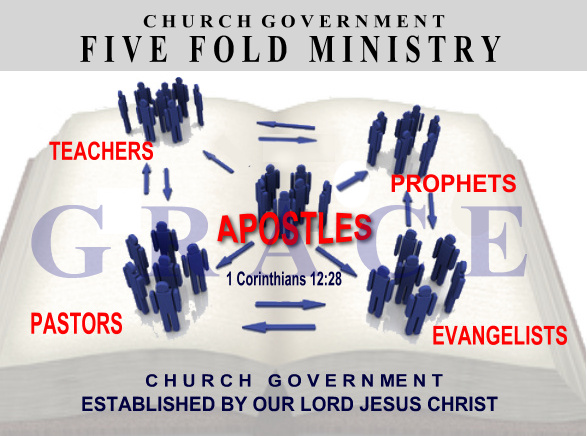
  • What about what some call the 5-fold ministry in Ephesians 4:11 or 1 Corinthians 12:28-29?
five-fold-ministry
  • Again, arguments that try to argue for modern apostles betray a misunderstanding of the different usage of apostle in the NT.
  • If the apostles had to be witnesses of Jesus earthly ministry and resurrection, as well as be verified by miraculous signs and wonders, then the only way for someone to be an apostle (in the specific sense) is to be 2,000 years old.
    • There are apostles all over the place in the general sense of “messenger” (in that sense, I’m an apostle too), but I’ve never once heard of someone who calls themselves an “apostle” in order to insinuate the same level of divine authority as this fellow.
    • As a general rule; “doctrines” that are built on a single verse of scripture (like Eph. 4:11, which is the only passage I’ve ever seen used to defend the concept of the “five-fold ministry”) are highly suspicious.
  • What was the relation of prophets and apostles?
    • Jesus paralleled prophets and apostles in Luke 11:49, and they’re spoken of in parallel language in Eph. 2:20, 3:5; 2 Pet. 3:2; and Rev. 18:20.
    • Both prophets and apostles speak for God, but only the apostles were messengers of Christ that were personally sent by him.
      • The big difference is Jesus.
      • In the NT, you have prophets who are not apostles (i.e. Agabus), but no apostles who are not prophets.
So, if someone calls themselves an “apostle” and is not a miraculously verified witness of both Christ’s earthly ministry and resurrection, then they’re basically using the term as synonymous with the term “Christian”.  If someone is not a miraculously verified witness of both Christ’s earthly ministry and resurrection but they call themselves an “apostle” because they’re planting churches, then they’re basically using the term as synonymous with the term “pastor”.
I hope that gives some food for thought and clears up the terminology confusion for you as much as it did for me!

9 LESSONS FROM GOD CONCERNING SICKNESS

Sickness is meant…

1. To make us think—to remind us that we have a soul as well as a body—an immortal soul—a soul that will live forever in happiness or in misery—and that if this soul is not saved we had better never have been born.
2. To teach us that there is a world beyond the grave—and that the world we now live in is only a training-place for another dwelling, where there will be no decay, no sorrow, no tears, no misery, and no sin.
3. To make us look at our past lives honestly, fairly, and conscientiously. Am I ready for my great change if I should not get better? Do I repent truly of my sins? Are my sins forgiven and washed away in Christ’s blood? Am I prepared to meet God?
4. To make us see the emptiness of the world and its utter inability to satisfy the highest and deepest needs of the soul.
5. To send us to our Bibles. That blessed Book, in the days of health, is too often left on the shelf, becomes the safest place in which to put a bank-note, and is never opened from January to December. But sickness often brings it down from the shelf and throws new light on its pages.
6. To make us pray. Too many, I fear, never pray at all, or they only rattle over a few hurried words morning and evening without thinking what they do. But prayer often becomes a reality when the valley of the shadow of death is in sight.
7. To make us repent and break off our sins. If we will not hear the voice of mercies, God sometimes makes us “hear the rod.”
8. To draw us to Christ. Naturally we do not see the full value of that blessed Savior. We secretly imagine that our prayers, good deeds, and sacrament-receiving will save our souls. But when flesh begins to fail, the absolute necessity of a Redeemer, a Mediator, and an Advocate with the Father, stands out before men’s eyes like fire, and makes them understand those words, “Simply to Your cross I cling,” as they never did before. Sickness has done this for many—they have found Christ in the sick room.
9. To make us feeling and sympathizing towards others. By nature we are all far below our blessed Master’s example, who had not only a hand to help all, but a heart to feel for all. None, I suspect, are so unable to sympathize as those who have never had trouble themselves—and none are so able to feel as those who have drunk most deeply the cup of pain and sorrow.
Summary: Beware of fretting, murmuring, complaining, and giving way to an impatient spirit. Regard your sickness as a blessing in disguise – a good and not an evil – a friend and not an enemy. No doubt we should all prefer to learn spiritual lessons in the school of ease and not under the rod. But rest assured that God knows better than we do how to teach us. The light of the last day will show you that there was a meaning and a “need be” in all your bodily ailments. The lessons that we learn on a sick-bed, when we are shut out from the world, are often lessons which we should never learn elsewhere.

~ J.C. Ryle

Monday, December 2, 2013

So who exactly IS the mainstream of the charismatic movement?

So who exactly IS the mainstream of the charismatic movement?

WHAT DOCTRINES ARE FUNDAMENTAL? PART 3

V. The Fundamental Doctrines Are All Summed up in the Person and Work of Christ
The Fundamental Doctrines Are All Summed up in the Person and Work of Christ.Paul wrote, "No man can lay a foundation other than the one which is laid, which is Jesus Christ" (1 Corinthians 3:11). Christ Himself embodied or established every doctrine that is essential to genuine Christianity. Those who reject any of the cardinal doctrines of the faith worship a "christ" who is not the Christ of Scripture.
How are the fundamentals of the faith personified in Christ?
With regard to the inspiration and authority of Scripture, He is the incarnate Word (John 1:1, 14). He upheld the written Word's absolute authority (Matthew 5:18). Christ Himself established sola Scriptura as a fundamental doctrine when He upbraided the Pharisees for nullifying Scripture with their own traditions: "Rightly did Isaiah prophesy of you hypocrites, as it is written, 'This people honors Me with their lips, but their heart is far away from Me. But in vain do they worship Me, teaching as doctrines the precepts of men.' Neglecting the commandment of God, you hold to the tradition of men.... You nicely set aside the commandment of God in order to keep your tradition" (Mark 7:6-9). Our Lord had much to say about the authority and infallibility of the Word of God.
In the doctrine of justification by faith, it is Christ's own perfect righteousness, imputed to the believer, that makes the pivotal difference between true biblical justification and the corrupted doctrine of Roman Catholicism and the cults. That is what Paul meant when he wrote, "Christ is the end of the law for righteousness to everyone who believes" (Romans 10:4). It is also why Paul wrote that Christ is become to us righteousness (1 Corinthians 1:30), and it is why Jeremiah called Him "The Lord our righteousness" (Jeremiah 23:6). The Lord Himself, Jesus Christ, is our righteousness (Jeremiah 33:16). That is the very essence of justification by faith alone, sola fide.
Of course, all the fundamental doctrines related to the incarnation -- the Virgin Birth of Christ, His deity, His humanity, and His sinlessness -- are part and parcel of who He is. To deny any of those doctrines is to attack Christ Himself.
The essential doctrines related to His work -- His atoning death, His resurrection, and the reality of His miracles -- are the very basis of the Gospel (cf. 1 Corinthians 15:1-4; Hebrews 2:3-4). Reject them and you nullify the heart of the Christian message.
The fundamentals of the faith are so closely identified with Christ that the apostle John used the expression "the teaching of Christ" as a kind of shorthand for the set of doctrines he regarded as fundamental. To him, these doctrines represented the difference between true Christianity and false religion.
That is why he wrote, "Anyone who goes too far and does not abide in the teaching of Christ, does not have God; the one who abides in the teaching, he has both the Father and the Son" (2 John 9). Far from encouraging union with those who denied the fundamental truths of the faith, John forbade any form of spiritual fellowship with or encouragement of such false religion (vv. 10-11).
So What?
It has not been my purpose here to attempt to give an exhaustive list of fundamental doctrines. Such a task is beyond the scope of this article. Furthermore, the attempt to precisely identify and number such a list of doctrines would be an extremely difficult thing to do. However, a reasonable list of fundamentals would necessarily begin with these doctrines explicitly identified in Scripture as non-negotiable: the absolute authority of Scripture over tradition (sola Scriptura), justification by faith alone (sola fide), the deity of Christ, and the Trinity.
But what are we to do with this understanding? First of all, we should resist any temptation to wield these doctrines like a judge's gavel that consigns multitudes to eternal doom. We must not set ourselves up as judges of other people's eternal fate.
On the other hand, we must recognize that those who have turned away from sound doctrine in matters essential to salvation are condemning themselves. "He who does not believe has been judged already" (John 3:18). Our passion ought to be to proclaim the fundamentals with clarity and precision, in order to turn people away from the darkness of error. We must confront head-on the blindness and unbelief that will be the reason multitudes will one day hear the Lord say, "I never knew you; depart from Me" (Matthew 7:23). Again, it must be stressed that those who act as if crucial doctrines were of no consequence only heap the false teacher's guilt on themselves (2 John 11).
We have no right to pronounce a sentence of eternal doom against anyone (John 5:22). But by the same token, we have no business receiving just anyone into the communion and fellowship of the church. We should no more forge spiritual bonds with people whose religion is fundamentally in error than we would seek fellowship with those guilty of heinous sin. To do so is tantamount to the arrogance shown by the Corinthians, who refused to dismiss from their fellowship a man living in the grossest kind of sin (1 Corinthians 5:1-3).
We must also remember that serious error can be extremely subtle. False teachers don't wear a sign proclaiming who they are. They disguise themselves as apostles of Christ (2 Corinthians 11:13). "And no wonder, for even Satan disguises himself as an angel of light. Therefore it is not surprising if his servants also disguise themselves as servants of righteousness" (vv. 14-15). In view of the current hunger for ecumenical compromise, nothing is more desperately needed in the church right now than a new movement to reemphasize the fundamental articles of the faith.